
Posture Is More Than Just Standing Tall
When we think of posture, most of us picture a person standing upright, shoulders back, head held high. While good posture can certainly influence appearance and confidence, its impact runs much deeper. Posture is a foundational component of spinal health, nervous system function, and overall wellbeing.
In today’s digital world, poor posture has become a widespread issue. Hours spent hunched over laptops, scrolling on smartphones, or leaning forward at workstations have placed unprecedented strain on our spines. Over time, these habits can lead to chronic discomfort, joint degeneration, and even interference with the nervous system.
This article will explore the long-term effects of poor posture, explain how it affects your spine and body, and discuss why chiropractic care is vital for both prevention and correction—even in the absence of pain.
Understanding Posture: The Spine’s Natural Alignment
The human spine is not a straight column; it is a series of curves that function together to absorb shock and support the body. There are three main curves:
Cervical Curve – the forward curve of the neck
Thoracic Curve – the backward curve of the upper back
Lumbar Curve – the forward curve of the lower back
These curves help distribute the weight of the head and torso evenly across the spine, reducing stress on individual vertebrae, discs, muscles, and ligaments. Good posture maintains these curves in alignment, optimising both structural integrity and nervous system function.
When posture is compromised—through slouching, forward head posture, or rounded shoulders—these curves are altered. Even minor deviations, if maintained over time, can produce significant stress on the musculoskeletal and nervous systems.
The Hidden Costs of Poor Posture
Poor posture is often dismissed as a minor inconvenience, but its long-term consequences are far-reaching:
1. Musculoskeletal Strain
When the head drifts forward, the neck and upper back muscles must work harder to support its weight. For example, at a 30-degree forward tilt, the effective load on the cervical spine can triple from approximately 5 kg to nearly 18 kg. Over time, this results in chronic muscle fatigue, tightness, and pain.
2. Joint and Disc Degeneration
Altered posture changes the forces applied to the spine. Discs, which act as cushions between vertebrae, experience uneven pressure. This can accelerate wear, leading to conditions like degenerative disc disease, osteoarthritis, and bone spurs.
3. Reduced Range of Motion
Long-term poor posture can cause stiffening in the joints of the neck, thoracic spine, and shoulders. Reduced mobility can make simple daily tasks, such as turning the head or reaching overhead, uncomfortable or difficult.
4. Nervous System Interference
The spinal column protects the spinal cord, which transmits signals between the brain and the body. Misalignment or altered spinal curves can place pressure on nerves, interfering with this communication. While symptoms may not always be immediately noticeable, interference can manifest as fatigue, headaches, tingling, or reduced organ function over time.
5. Secondary Health Effects
Postural strain affects more than the spine. Forward head posture and slouched shoulders can restrict lung capacity, making breathing less efficient. Over time, this can reduce oxygen intake, contributing to fatigue and reduced concentration. Additionally, posture has been linked to mood regulation: upright posture is associated with higher confidence and improved mental state, whereas slouching can contribute to stress and low mood.
Common Postural Patterns and Their Consequences
Forward Head Posture
This occurs when the head moves in front of the shoulders, often due to prolonged device use or desk work. Forward head posture increases cervical spine load, tightens upper back muscles, and can lead to chronic tension headaches.
Rounded Shoulders and Thoracic Kyphosis
Slouching at desks or over devices can round the shoulders and exaggerate the thoracic curve. This can cause tight chest muscles, weak upper back muscles, and contribute to long-term spinal degeneration.
Pelvic Tilt and Lumbar Strain
Prolonged sitting often leads to an anterior pelvic tilt, where the pelvis tilts forward, exaggerating the lumbar curve. This places extra strain on the lower back and can contribute to chronic pain or sciatica over time.
Text Neck
A specific pattern related to mobile device use, “text neck” is characterised by forward head posture and rounded upper back. It increases cervical spine stress, fatigues neck muscles, and can accelerate degenerative changes in the vertebrae.
How Lifestyle Factors Amplify Postural Problems
While poor posture can arise naturally, certain lifestyle factors accelerate its progression:
Extended Screen Time: Hours spent on smartphones, laptops, or tablets force the spine into unnatural positions.
Sedentary Behaviour: Long periods of sitting without movement weaken postural muscles, making it harder to maintain alignment.
Improper Ergonomics: Workstations that are too low, chairs without lumbar support, and poorly positioned monitors contribute to chronic slouching.
Sleep Position: Sleeping with inadequate support for the neck and spine can perpetuate postural stress, particularly for side and stomach sleepers.
How Chiropractic Care Protects and Restores Postural Health
Chiropractic care addresses poor posture at its root, not just the symptoms. Regular assessments and adjustments can restore spinal alignment, correct imbalances, and enhance nervous system function.
Restoring the Natural Curves
Through targeted techniques, chiropractors can improve spinal curvature, particularly in the cervical and thoracic regions. Restoring the natural curve reduces stress on discs, ligaments, and muscles, preventing long-term degeneration.
Releasing Muscular Tension
Adjustments improve joint mobility, which in turn reduces compensatory muscle tension. This helps muscles function more efficiently and supports better posture throughout the day.
Supporting Nervous System Function
Correct alignment allows nerves to transmit signals more efficiently. This can improve overall bodily function, from energy levels to concentration and even organ performance.
Preventive Care
Chiropractic is not only for those experiencing pain. Regular spinal checks are essential even when you feel fine. If you spend long hours on devices, have a physically demanding job, or simply want to maintain spinal health, a chiropractor can identify and correct subtle misalignments before they develop into symptoms.
Daily Practices That Complement Chiropractic Care
Chiropractic adjustments are most effective when combined with consistent, posture-conscious habits:
Screen Ergonomics
Raise monitors to eye level.
Use external keyboards and mice to prevent leaning forward.
Keep devices at a comfortable distance to reduce forward head tilt.
Movement and Stretching
Perform chin tucks to strengthen neck stabilisers.
Roll shoulders and open the chest to counteract rounding.
Incorporate regular mobility exercises to maintain joint health.
Sitting and Standing Awareness
Take breaks every 20–30 minutes to stand or walk.
Maintain neutral spine alignment when sitting or standing.
Engage core muscles to support the lower back.
Sleep Support
Use pillows that maintain cervical curvature.
Avoid sleeping on the stomach, which forces neck rotation.
Ensure mattresses provide balanced support for the entire spine.
The Cumulative Effect of Good Habits
When chiropractic care is paired with posture-conscious daily routines, the benefits compound:
Reduced neck, back, and shoulder pain
Improved spinal structure and reduced degeneration risk
Enhanced nervous system function and energy
Better breathing, concentration, and mood
Increased resilience against the demands of modern technology
Don’t Wait for Pain: The Importance of Early Intervention
One of the biggest misconceptions about spinal health is that you only need care when it hurts. By the time pain develops, structural changes may already be occurring.
Regular chiropractic checks allow:
Early detection of misalignments and postural deviations
Preventive adjustments to maintain alignment and nervous system function
Education on ergonomics, exercises, and lifestyle habits
Long-term protection for spinal integrity and overall wellbeing
Even without discomfort, if your lifestyle involves prolonged sitting, device use, or physical strain, a chiropractic assessment is a proactive way to safeguard your health.
Prioritising Spinal Health for the Long Term
Poor posture is more than a cosmetic issue; it’s a serious factor in long-term spinal and nervous system health. The combination of modern lifestyle habits and prolonged device use has made posture-related problems common, but they are not inevitable.
Chiropractic care addresses the root causes of poor posture, restoring spinal alignment, supporting the nervous system, and promoting long-term structural integrity. When paired with conscious daily habits—ergonomics, movement, and proper sleep—chiropractic ensures your spine functions optimally, preventing degeneration and maintaining overall health.
By taking posture seriously today, you can protect your spine, enhance your nervous system, and enjoy a future free from preventable pain and dysfunction
This information is general in nature and does not consider your personal health and circumstances. Please consult one of our chiropractors for more tailored advice to you.
References
Harrison, D. E., Harrison, D. D., Haas, J. W., et al. (2005). Structural rehabilitation of the spine and posture: Rationale for treatment beyond the resolution of symptoms. Journal of Manipulative and Physiological Therapeutics, 28(6), 465–482.
Hansraj, K. K. (2014). Assessment of stresses in the cervical spine caused by posture and position of the head. Surgical Technology International, 25, 277–279.
Neupane, S., Ali, U. T., & Mathew, A. (2017). Text neck syndrome—Systematic review. Imperial Journal of Interdisciplinary Research, 3(7), 141–148.
Kuo, Y. L., Tully, E. A., & Galea, M. P. (2009). Sagittal spinal posture after exercise. Spine, 34(10), 1046–1051.
Falla, D., O’Leary, S., Farina, D., & Jull, G. (2011). The change in deep cervical flexor activity after training is associated with the degree of pain reduction in patients with chronic neck pain. Clinical Journal of Pain, 27(7), 628–634.
Grab Our New Patient Offer Today
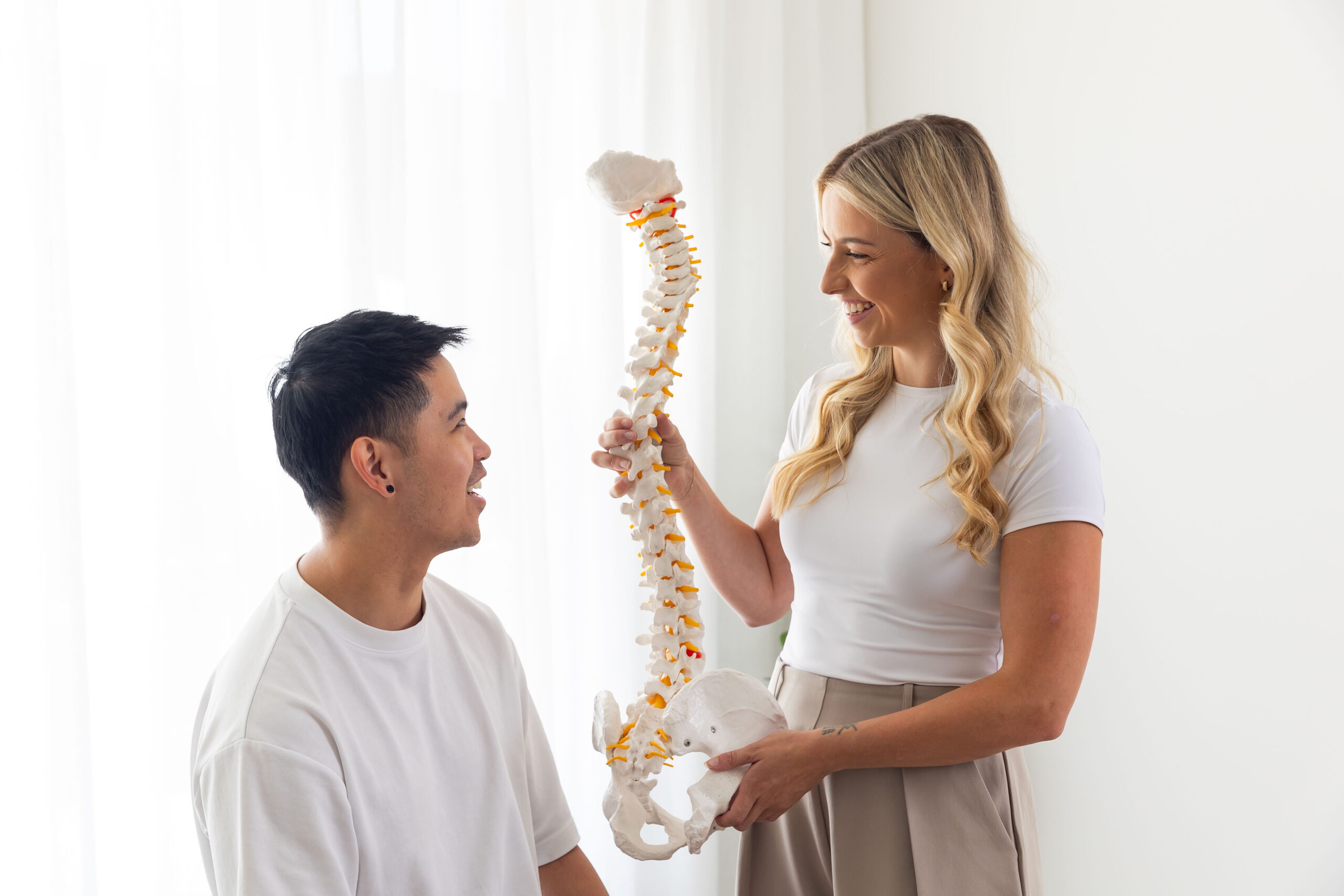

We’re thrilled to introduce our special New Patient Chiropractic Offer designed exclusively for individuals like you who are seeking relief from discomfort and a path to long-term wellness:
- Comprehensive health history to uncover the root cause of your discomfort, paving the way for effective treatment
- Health goal setting
- A thorough examination process including range of motion, orthopedic and neurological testing
- Posture analysis
- Referral for diagnostic imaging if clinically indicated
- Report of findings visit to go through results and recommendations to help facilitate your health goals
For Only $109
Our Team
Our team at Future Chiropractic are mission driven and dedicated to providing high quality care to all members of our community. We are goal orientated which gives us the guidance necessary to help you get to where you want to be and live the life you want to live.